
Next Post
This post may contain affiliate links, please see our privacy policy for details.
Warm, fresh pita is one of those simple joys—soft, a little chewy, and perfect for scooping up all the sauces. This is my cozy, dependable way to make Greek-style pitas at home.
We’ll use a straightforward dough, a hot pan, and a few easy cues so your pitas puff beautifully—no special gear required. Great for weeknights, meal prep, and any “let’s make gyros” cravings.
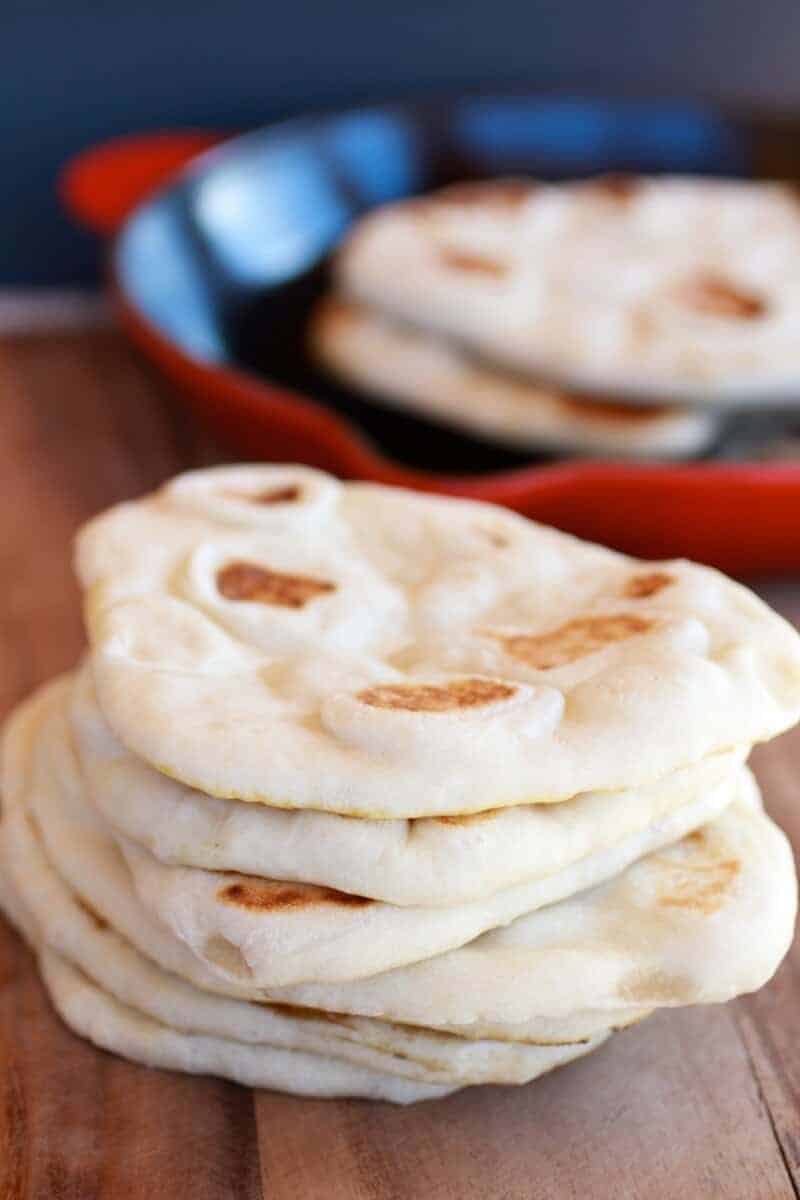
These are just that good.
Like it is crazy, just insanely good. You could not get them better unless you flew to Greece.
I can promise you guys, that after you make this easy homemade traditional Greek pita bread you will never want to buy the store-bought version again. Sure, you may have to for convenience and time purposes, but you will probably be wishing you were eating these.
Nah, not probably. You will. Guaranteed.
They’re so soft, so chewy and the flavor is just so good. There really are no words to describe just how good these are.
If you can make pizza dough, you can make these. And even if you have never made pizza dough, you can still make these. They are so simple and the dough is really easy to work with. These pitas are going to transform your lunches and even your dinners! Greek pizza? Yes!
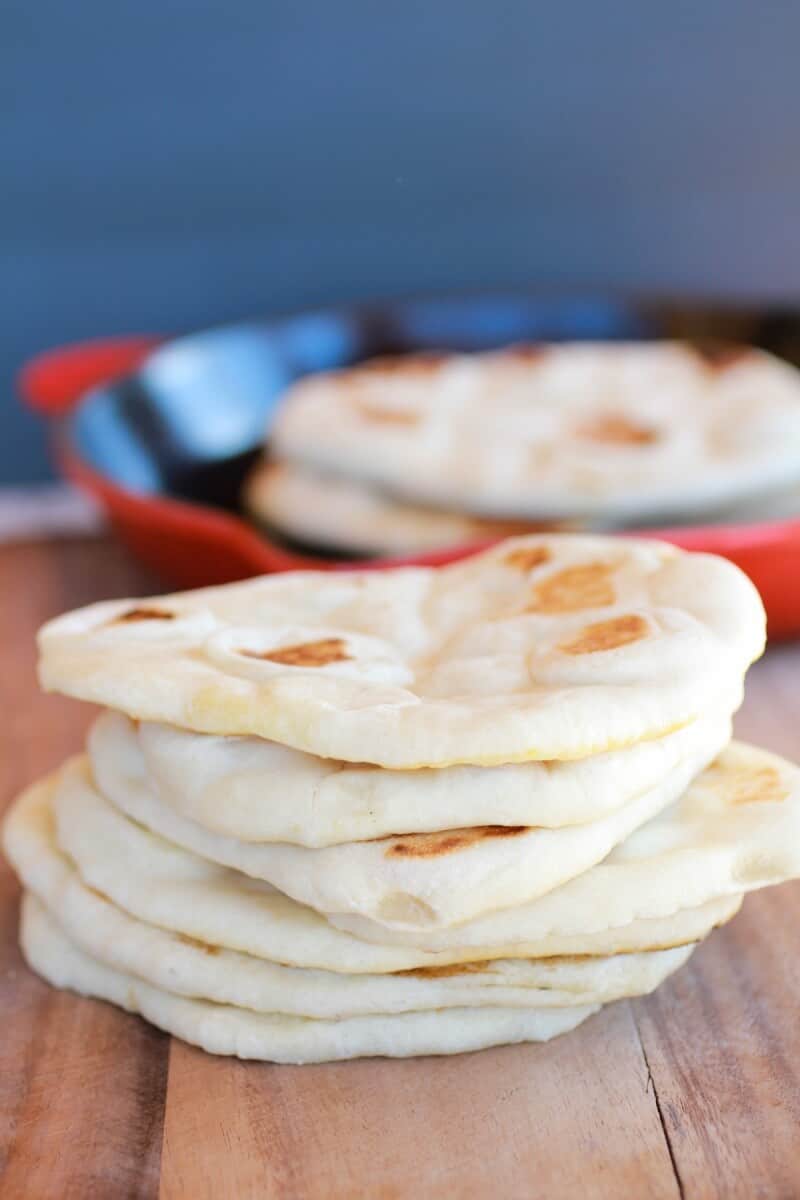
Make-Ahead, Storage & Reheat
-
Dough: After the first rise, refrigerate dough (lightly oiled, covered). Use within 1–2 days; let it warm up just until pliable before rolling.
-
Cooked Pitas: Cool completely, then store airtight at room temp for a day or two; refrigerating can toughen—reheat with a quick steam or warm skillet.
-
Freeze: Freeze stacked with parchment between pitas. Reheat straight from frozen in a hot skillet or wrapped in foil in a warm oven until soft and steamy.
FAQ:
Why didn’t my pitas puff?
Usually the pan wasn’t hot enough, the dough was rolled too thick, or the discs dried out. Heat the skillet well, roll evenly, and keep dough covered as you work.
Can I make these without a cast-iron skillet?
Yes—use any heavy-bottomed skillet or a griddle. Just preheat thoroughly; the right surface heat is more important than the pan material.
Can I prep the dough ahead?
Make the dough, let it rise, then refrigerate up to 1–2 days. Bring to a workable, slightly cool room temp so it rolls without springing back.
What’s the best way to reheat pita?
A hot, dry skillet or a quick foil wrap in a warm oven restores softness; a short steam also works. Avoid microwaving too long or they’ll toughen as they cool.
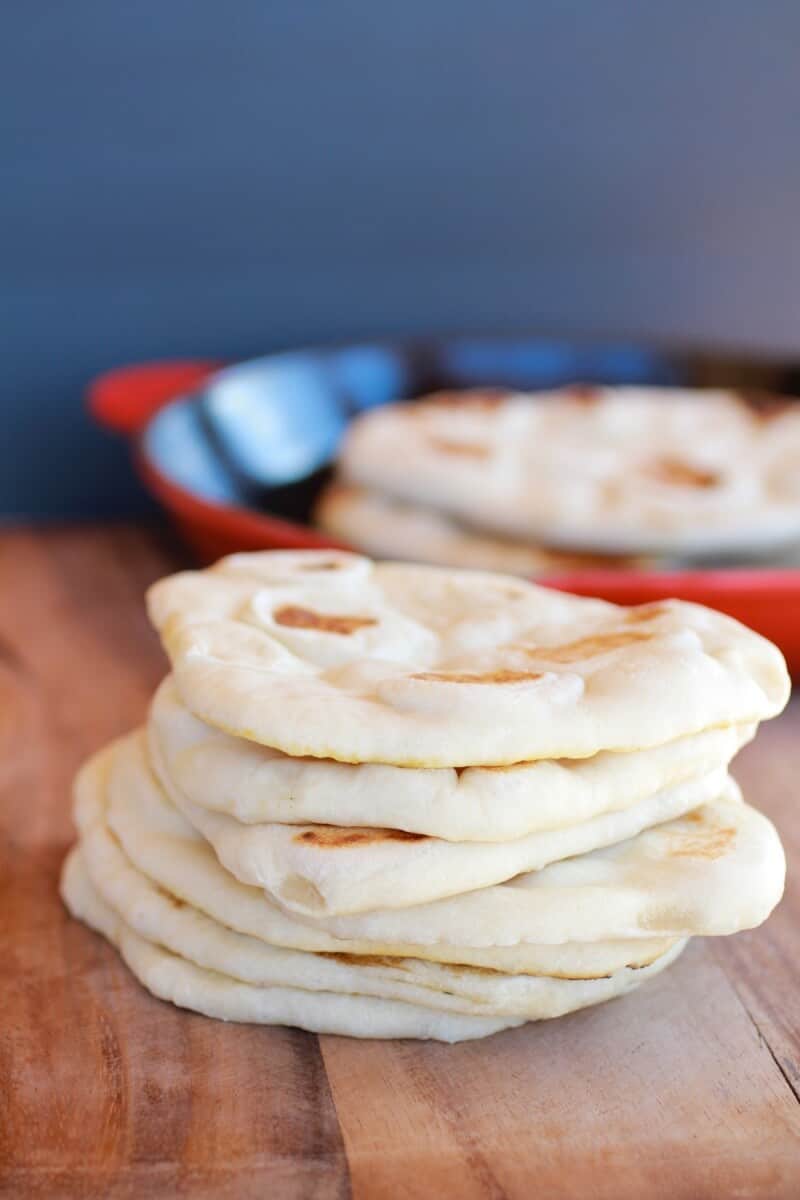
Traditional Greek Pita Bread.
Servings: 8 pita rounds
Calories Per Serving: 193 kcal
Nutritional information is only an estimate. The accuracy of the nutritional information for any recipe on this site is not guaranteed.
Ingredients
- 1 cup hot water but not boiling
- 2 teaspoons active dry or instant yeast
- 2 1/2 - 3 cups all-purpose flour
- 2 teaspoons salt
- 1 tablespoon olive oil
Instructions
- Mix the water and yeast together in the bowl of a stand mixer (a large bowl will also work if you do not have a mixer), and let sit for about five minutes until the yeast is dissolved. Add 2 1/2 cups of the flour (saving the last half cup for kneading), salt, and olive oil. If using a stand mixer attach the dough and need the dough on medium speed for 8 minutes, adding more flour until you have a smooth dough. If using your hands sprinkle a little of the extra flour onto your clean work surface and turn out the dough. Knead the dough for about 5-7 minutes, until the dough is smooth and elastic. Add more flour as needed to keep the dough from sticking to your hands or the work surface, but try to be sparing. It's better to use too little flour than too much. If you get tired, stop and let the dough rest for a few minutes before finishing kneading.
- Clean the bowl you used to mix the dough and run it with a little olive oil. Set the dough in the bowl and turn it until it's coated with oil. Cover with a clean dishcloth or plastic wrap and let the dough rise until it's doubled in bulk, about 1 hour.
- At this point, you can refrigerate the pita dough until it is needed. You can also bake one or two pitas at a time, saving the rest of the dough in the fridge. The dough will keep refrigerated for about a week.
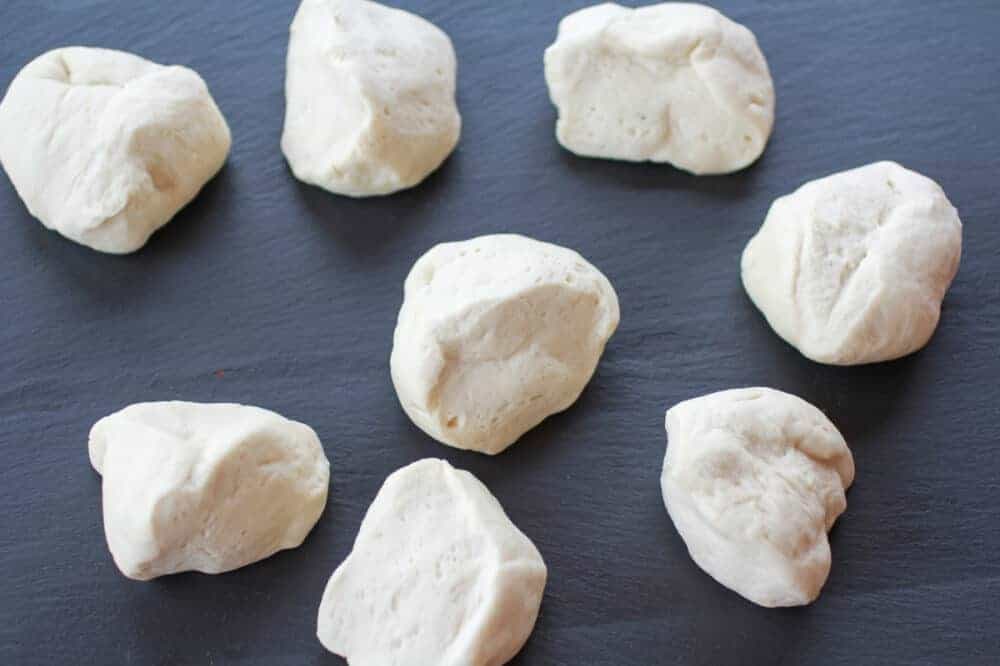
- Gently deflate the dough and turn it out onto a lightly floured work surface. Divide the dough into 8 equal pieces and gently flatten each piece into a thick disk. Using a floured rolling pin, roll one of the pieces into a circle 8-9 inches wide and about a quarter inch thick. Lift and turn the dough frequently as you roll to make sure the dough isn't sticking to your counter. Sprinkle with a little extra flour if it starting to stick. If the dough starts to spring back, set it aside to rest for a few minutes, then continue rolling. Repeat with the other pieces of dough. (Once you get the hang of it you can be cooking one pita while rolling the next one out.)
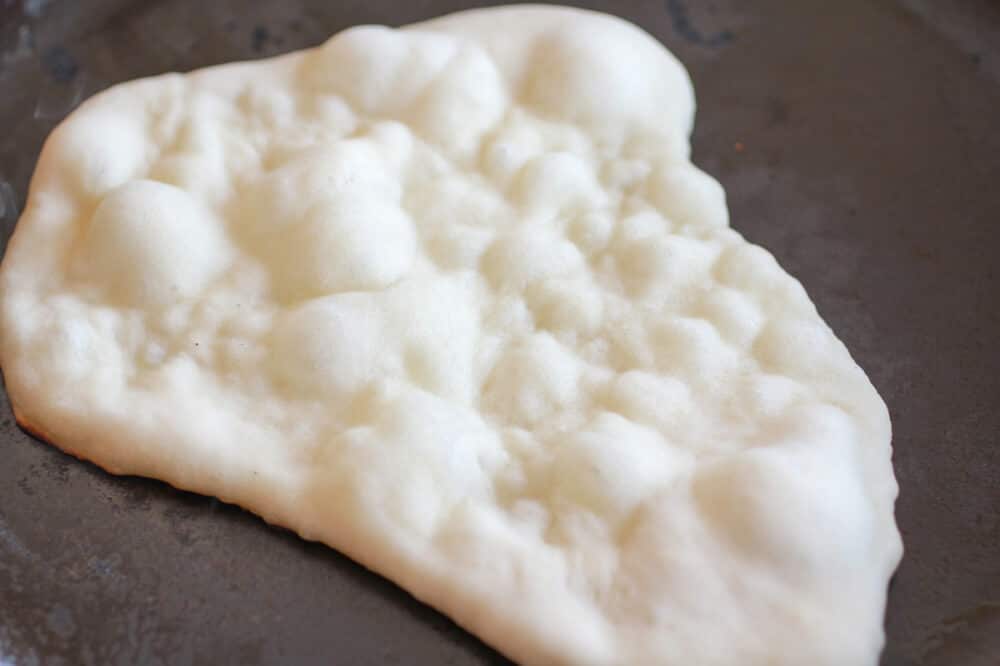
- Warm a cast iron skillet over medium-high heat (you want a hot pan). Drizzle a little oil in the pan and wipe off the excess.Lay a rolled-out pita on the skillet and bake for 30 seconds, until you see bubbles starting to form. Flip and cook for 1-2 minutes on the other side, until large toasted spots appear on the underside. Flip again and cook another 1-2 minutes to toast the other side. The pita should start to puff up during this time; if it doesn't or if only small pockets form, try pressing the surface of the pita gently with a clean towel. Keep cooked pitas covered with a clean dishtowel while cooking any remaining pitas.
- These are best eaten fresh, but will keep in a ziplock bag for a few days or in the freezer.
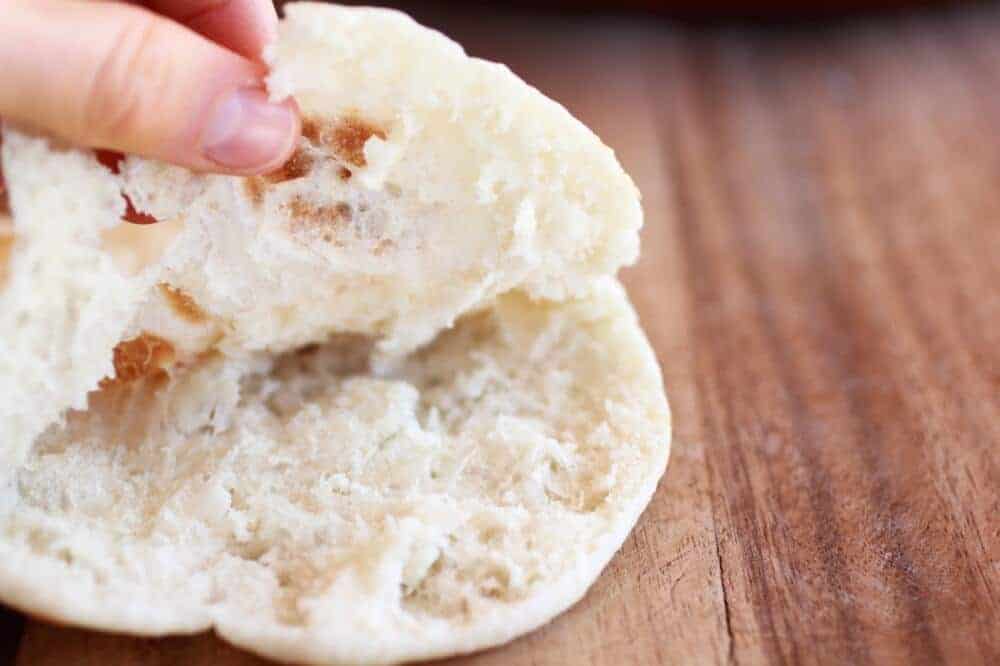
It is Sunday. The perfect day to make some fresh homemade Greek pitas!
Shared with: Inside BruCru Life, Lil Luna, Chef In Training, Buns In my Oven, Foodie Friday Friends, Tidy Mom, Taste and Tell, Cheerios and Lattes, Somewhat Simple, Mom on Timeout, I Heart Nap Time, Fine Craft Guide, The Country Cook, Whipperberry, Chef In Training
This post was originally published on February 17, 2013














Do you need a cast iron skillet for these to turn out?
I made these last night and they turned out amazing! I usually make lamb meatball gyros and buy my pitas at Trader Joe’s but you sold me on if you can bake bread you can make these. The pitas made the meal! There are only 2 of us and we at 6 of the 8 pitas the batch made. We took the additional 2 to work today. I do have one question……did your kitchen get smoky when cooking them? I was cooking the pitas in my cast iron skillets – I have 2 Le Creuset pans and I used both the 10 and the 12 inch about medium-heat. After the 2nd batch of pitas the extra oil in the pan made my kitchen get really smoky. I had to put a box fan in my window because my kitchen fan was not doing the job. It cleared out quickly but I wonder if you had the same problem? They still tasted great and looked just like yours but I was wondering if you had a smoky issue?
Thanks for sharing your great recipe,
Lydia
Yup, my kitchen got smoky. I opened door. It is just whats happens when those caste iron pans get smoking hot, the smoke! Ha! So glad you liked them! I loved reading your comment!
Definitely trying these! PINNED!!!! Thanks for sharing with us!
I tried these last week, and used them to make a chicken pita with spicy ranch dressing. It was amazing. This time I’m going to sprinkle with a little Greek seasoning and enjoy them with some fresh hummus! Thanks for sharing this recipe! They are delish! and super easy!
I am so glad you liked them! Thanks reading!
Can’t wait to try this Tieghan! Pinned and featuring tomorrow!
Thanks so much for sharing! I am so happy you like them!
WOW, I just made these and they were amazing!!! They look just like your photo.. Thanks for sharing. Next time I might add some feta cheese and Greek seasoning..
Yum! I am so glad you liked them! Thanks for reading!
I have been looking for a good pita bread recipe, can’t wait to try it! Just pinned.
Oh, I have been wanting to make this for a long time now! I think I will pin this and do it soon! Hope you can link up at my Trendy Tuesday party going on right now!! http://www.sweetlittlegals.com/2013/02/trendy-tuesday-25.html
looks awesome!!! Thanks for sharing at Tasteful Tuesdays! Just wanted to let you know that this will be featured at tomorrows party :o) Link will go live MOnday night.
http://www.nap-timecreations.com/2013/02/features-and-tasteful-tuesday-party.html
Thanks for the feature!
Question…what do you mean by “press down with a clean towel” if they don’t puff? I am pretty experienced at bread making, but Pitas seem to have me stumped. Last time I tried only about half actually puffed using my cast iron skillet and the method that you described. I *need* it to work. I love pita bread and I hate it when something has me beat! 😉
Pressing the surface of the pita gently with a clean towel may help air pockets form, but even if the pockets do not form the pita is still amazing. I actually prefer them without the large pocket. =Don’t get to caught up on the big pocket (none of mine had one large pocket). Traditional Greek pita bread does not have a large packet, they look like the ones in my pics. Trust you will no regret making these, pockets or no pockets! Good luck!
Love this! I’d like to invite you to link up to Saturday Spotlight @ Angels Homestead.
http://angelshomestead.com/saturday-spotlight-5/
Hope to see you there 🙂
April
Looks delicious!
Hi!- Well I finally found some time to make these…! However, since you said you can save it, that’s what I did. Question: I left it in the bowl after it rose with the wrap over it. Should I have tightly wrapped it or does it matter? I just pulled it out of the fridge- should I let it come to room temp before I start making/baking/cooking it? Also, I didn’t have a dough hook so I hand kneaded it. You’re right, it is easy to work with. I’m not quite sure if I kneaded it enough though because it didn’t seem to rise very much – is it better to under knead it or over? I followed your suggestion about the flour so I sorta kept to the same thinking… So, wish me luck! (No, I have never made my own pizza dough either!)…If these don’t come out as well as yours, I will try again…I have a lot of leftover flour from Christmas! (cookies and such that I never found time to make…)- thanks! Karen
If the dough did not rise, you might have under kneaded it. However they may still turn out. I would allow the dough to come to room temp before trying to roll it out. Good luck!
I tried making these once but they turned out way too crispy. I’m going to give it another go with your recipe, we LOVE pita in our house! We would love it if you would link up at our new linky party: Two Girls and a Party Hosted by:
Dana @ This Silly Girl’s Life
Parrish @ Life with the Crust Cut Off
We hope to see you there!
Oh my! This looks fabulous! I am pinning this recipe and trying it this weekend… YUM!
hugs x
Crystelle
Thanks for pinning!